|
|
PhoenixZMQ
9.1.0
ZeroMQ back-end for the PhoenixSocket ecosystem leveraging ZeroMQ for scalable and flexible message passing
|
|
|
PhoenixZMQ
9.1.0
ZeroMQ back-end for the PhoenixSocket ecosystem leveraging ZeroMQ for scalable and flexible message passing
|
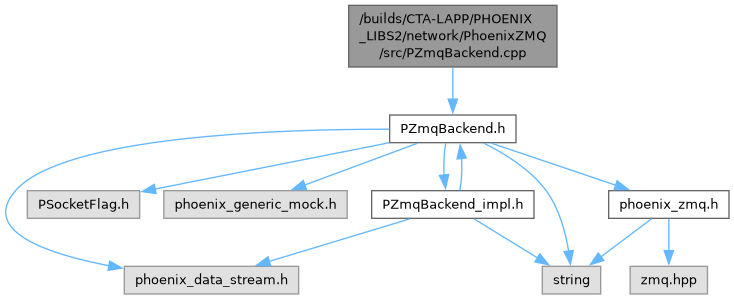
#include "PZmqBackend.h"Go to the source code of this file.
Functions | |
| PRecvStatus::PRecvStatus | checkRecvStatus (zmq::recv_result_t res) |
| Check the recv result and convert it into PRecvStatus. | |
| PSendStatus::PSendStatus | checkSendStatus (zmq::send_result_t res) |
| Check the send result and convert it into PSendStatus. | |
| zmq::recv_flags | convertToRecvFlag (PRecvFlag::PRecvFlag flag) |
| Convert a recv flag into zmq flag. | |
| zmq::send_flags | convertToSendFlag (PSendFlag::PSendFlag flag) |
| Convert a send flag into zmq flag. | |
| PZmqParam | pzmq_createParamClient (int type, int nbBufferMessage, int bufferSizeByte, size_t threadAffinity, ssize_t dataRate, int linger, int immediate) |
| Create param for a client socket. | |
| PZmqParam | pzmq_createParamServer (int type, int nbBufferMessage, int bufferSizeByte, size_t threadAffinity, ssize_t dataRate, int linger, int immediate) |
| Create param for a client socket. | |
| PRecvStatus::PRecvStatus checkRecvStatus | ( | zmq::recv_result_t | res | ) |
Check the recv result and convert it into PRecvStatus.
| res | : result of the zmq recv |
Definition at line 43 of file PZmqBackend.cpp.
Referenced by PZmqSocket::recvMsg().
| PSendStatus::PSendStatus checkSendStatus | ( | zmq::send_result_t | res | ) |
Check the send result and convert it into PSendStatus.
| res | : result of the zmq send |
ZMQ socket send has a bit of a strange implementation:
Definition at line 20 of file PZmqBackend.cpp.
Referenced by PZmqSocket::sendMsg().
| zmq::recv_flags convertToRecvFlag | ( | PRecvFlag::PRecvFlag | flag | ) |
Convert a recv flag into zmq flag.
| flag | : generic PRecvFlag |
Definition at line 69 of file PZmqBackend.cpp.
Referenced by PZmqSocket::recvMsg().
| zmq::send_flags convertToSendFlag | ( | PSendFlag::PSendFlag | flag | ) |
Convert a send flag into zmq flag.
| flag | : generic PSendFlag |
Definition at line 60 of file PZmqBackend.cpp.
Referenced by PZmqSocket::sendMsg().
| PZmqParam pzmq_createParamClient | ( | int | type, |
| int | nbBufferMessage, | ||
| int | bufferSizeByte, | ||
| size_t | threadAffinity, | ||
| ssize_t | dataRate, | ||
| int | linger, | ||
| int | immediate ) |
Create param for a client socket.
| context | : zmq context where to create socket |
| type | : type of the connection (ZMQ_PULL, ZMQ_PUSH, etc) |
| nbBufferMessage | : number of messages to be buffered |
| bufferSizeByte | : size of the zmq buffer in bytes |
| threadAffinity | : bit mask which determines which threads from the 0MQ I/O thread pool associated with the socket's context shall handle newly created connections (1 : means first, 2 : means second, 3 : means first and second, etc) |
| dataRate | : expected data rate (in kilobytes per second) |
| linger | : linger period for socket shutdown |
Definition at line 84 of file PZmqBackend.cpp.
References PZmqParam::bufferSizeByte, PZmqParam::dataRate, PZmqParam::immediate, PZmqParam::linger, PZmqParam::nbBufferMessage, PZmqParam::threadAffinity, and PZmqParam::type.
Referenced by PZmqSocketGenerator::client().
| PZmqParam pzmq_createParamServer | ( | int | type, |
| int | nbBufferMessage, | ||
| int | bufferSizeByte, | ||
| size_t | threadAffinity, | ||
| ssize_t | dataRate, | ||
| int | linger, | ||
| int | immediate ) |
Create param for a client socket.
| type | : type of the connection (ZMQ_PULL, ZMQ_PUSH, etc) |
| nbBufferMessage | : number of messages to be buffered |
| bufferSizeByte | : size of the zmq buffer in bytes |
| threadAffinity | : bit mask which determines which threads from the 0MQ I/O thread pool associated with the socket's context shall handle newly created connections (1 : means first, 2 : means second, 3 : means first and second, etc) |
| dataRate | : expected data rate (in kilobytes per second) |
| linger | : linger period for socket shutdown |
Definition at line 105 of file PZmqBackend.cpp.
References PZmqParam::bufferSizeByte, PZmqParam::dataRate, PZmqParam::immediate, PZmqParam::linger, PZmqParam::nbBufferMessage, PZmqParam::threadAffinity, and PZmqParam::type.
Referenced by PZmqSocketGenerator::server().
 1.17.0