|
|
PhoenixZMQ
9.1.0
ZeroMQ back-end for the PhoenixSocket ecosystem leveraging ZeroMQ for scalable and flexible message passing
|
|
|
PhoenixZMQ
9.1.0
ZeroMQ back-end for the PhoenixSocket ecosystem leveraging ZeroMQ for scalable and flexible message passing
|
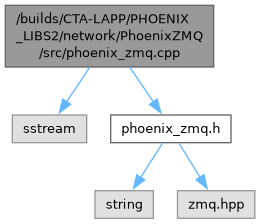
Go to the source code of this file.
Functions | |
| void | pzmq_closeServerSocket (zmq::socket_t *&socket) |
| Close the given server socket. | |
| zmq::socket_t * | pzmq_createClientSocket (zmq::context_t &context, const std::string &address, size_t port, int type, int nbBufferMessage, int bufferSizeByte, size_t threadAffinity, ssize_t dataRate, int immediate) |
| Add a client socket to the manager. | |
| zmq::socket_t * | pzmq_createClientSocket (zmq::context_t &context, int type, const std::string &address, size_t port, int immediate) |
| Create a client socket to be used by the SocketManagerZMQ. | |
| zmq::socket_t * | pzmq_createServerSocket (zmq::context_t &context, int type, size_t port) |
| Create a server socket to be used by the SocketManagerZMQ. | |
| zmq::socket_t * | pzmq_createServerSocket (zmq::context_t &context, size_t port, int type, int nbBufferMessage, int bufferSizeByte, size_t threadAffinity, ssize_t dataRate) |
| Add a server socket to the manager. | |
| void | pzmq_setBufferSize (zmq::socket_t *socket, int type, int nbBufferMessage, int dataRate, size_t bufferSizeByte) |
| Set the size of the buffer to send messages. | |
| void | pzmq_setDataRate (zmq::socket_t *socket, int type, int dataRate) |
| Set the data rate of the socket. | |
| void | pzmq_setNbMessageBuffer (zmq::socket_t *socket, int nbBufferMessage) |
| Set the number of messages in the messages buffer. | |
| void | pzmq_setRecvBufferSize (zmq::socket_t *socket, int bufferSizeByte) |
| Set the size of the buffer to received messages. | |
| void | pzmq_setSendBufferSize (zmq::socket_t *socket, int bufferSizeByte) |
| Set the size of the buffer to send messages. | |
| void | pzmq_setThreadAffinity (zmq::socket_t *socket, size_t threadAffinity) |
| Set the thread affinity of zmq. | |
| void pzmq_closeServerSocket | ( | zmq::socket_t *& | socket | ) |
Close the given server socket.
| [out] | socket | : pointer to the server socket to be closed (will be set to NULL at then end of the function) |
Definition at line 117 of file phoenix_zmq.cpp.
| zmq::socket_t * pzmq_createClientSocket | ( | zmq::context_t & | context, |
| const std::string & | address, | ||
| size_t | port, | ||
| int | type, | ||
| int | nbBufferMessage, | ||
| int | bufferSizeByte, | ||
| size_t | threadAffinity, | ||
| ssize_t | dataRate, | ||
| int | immediate ) |
Add a client socket to the manager.
| context | : zmq context where to create socket |
| address | : address of the server to be connected to |
| port | : port to be used |
| type | : type of the connection (ZMQ_PULL, ZMQ_PUSH, etc) |
| nbBufferMessage | : number of messages to be buffered |
| bufferSizeByte | : size of the zmq buffer in bytes |
| threadAffinity | : bit mask which determines which threads from the 0MQ I/O thread pool associated with the socket's context shall handle newly created connections (1 : means first, 2 : means second, 3 : means first and second, etc) |
| dataRate | : expected data rate (in kilobytes per second) |
Definition at line 101 of file phoenix_zmq.cpp.
References pzmq_createClientSocket(), pzmq_setBufferSize(), and pzmq_setThreadAffinity().
| zmq::socket_t * pzmq_createClientSocket | ( | zmq::context_t & | context, |
| int | type, | ||
| const std::string & | address, | ||
| size_t | port, | ||
| int | immediate ) |
Create a client socket to be used by the SocketManagerZMQ.
| context | : zeromq context which defines the number of thread to be used in the data transfert |
| type | : type of the socket (ZMQ_PULL, ZMQ_PUSH, etc) |
| address | : address of the socket (example localhost or 127.0.0.1) |
| port | : port to be used |
Definition at line 18 of file phoenix_zmq.cpp.
Referenced by PZmqSocket::createClientSocket(), and pzmq_createClientSocket().
| zmq::socket_t * pzmq_createServerSocket | ( | zmq::context_t & | context, |
| int | type, | ||
| size_t | port ) |
Create a server socket to be used by the SocketManagerZMQ.
| context | : zeromq context which defines the number of thread to be used in the data transfert |
| type | : type of the socket (ZMQ_PULL, ZMQ_PUSH, etc) |
| port | : port to be used |
Definition at line 52 of file phoenix_zmq.cpp.
Referenced by PZmqSocket::createServerSocket(), and pzmq_createServerSocket().
| zmq::socket_t * pzmq_createServerSocket | ( | zmq::context_t & | context, |
| size_t | port, | ||
| int | type, | ||
| int | nbBufferMessage, | ||
| int | bufferSizeByte, | ||
| size_t | threadAffinity, | ||
| ssize_t | dataRate ) |
Add a server socket to the manager.
| context | : zmq context where to create socket |
| port | : port to be used |
| type | : type of the connection (ZMQ_PULL, ZMQ_PUSH, etc) |
| nbBufferMessage | : number of messages to be buffered |
| bufferSizeByte | : size of the zmq buffer in bytes |
| threadAffinity | : bit mask which determines which threads from the 0MQ I/O thread pool associated with the socket's context shall handle newly created connections (1 : means first, 2 : means second, 3 : means first and second, etc) |
| dataRate | : expected data rate (in kilobytes per second) |
Definition at line 77 of file phoenix_zmq.cpp.
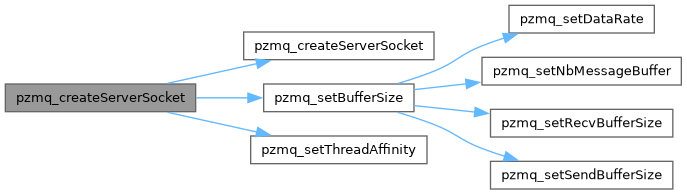
References pzmq_createServerSocket(), pzmq_setBufferSize(), and pzmq_setThreadAffinity().
| void pzmq_setBufferSize | ( | zmq::socket_t * | socket, |
| int | type, | ||
| int | nbBufferMessage, | ||
| int | dataRate, | ||
| size_t | bufferSizeByte ) |
Set the size of the buffer to send messages.
| [out] | socket | : socket to be modified |
| type | : type of the socket to be used | |
| nbBufferMessage | : number of messages to be buffered | |
| dataRate | : expected data rate (in kilobytes per second) | |
| bufferSizeByte | : size of the zmq buffer in bytes |
Definition at line 210 of file phoenix_zmq.cpp.
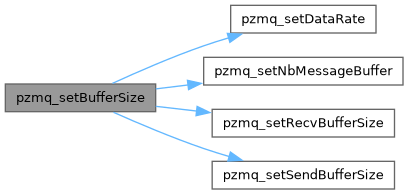
References pzmq_setDataRate(), pzmq_setNbMessageBuffer(), pzmq_setRecvBufferSize(), and pzmq_setSendBufferSize().
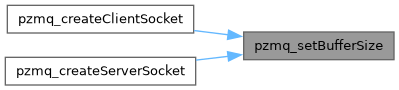
Referenced by pzmq_createClientSocket(), and pzmq_createServerSocket().
| void pzmq_setDataRate | ( | zmq::socket_t * | socket, |
| int | type, | ||
| int | dataRate ) |
Set the data rate of the socket.
| [out] | socket | : socket to be modified |
| type | : type of the socket to be used | |
| dataRate | : expected data rate (in kilobytes per second) |
Definition at line 146 of file phoenix_zmq.cpp.
Referenced by pzmq_setBufferSize().
| void pzmq_setNbMessageBuffer | ( | zmq::socket_t * | socket, |
| int | nbBufferMessage ) |
Set the number of messages in the messages buffer.
| [out] | socket | : socket to be modified |
| nbBufferMessage | : number of messages to be buffered |
Definition at line 129 of file phoenix_zmq.cpp.
Referenced by pzmq_setBufferSize().
| void pzmq_setRecvBufferSize | ( | zmq::socket_t * | socket, |
| int | bufferSizeByte ) |
Set the size of the buffer to received messages.
| [out] | socket | : socket to be modified |
| bufferSizeByte | : size of the zmq buffer in bytes |
Definition at line 162 of file phoenix_zmq.cpp.
Referenced by pzmq_setBufferSize().
| void pzmq_setSendBufferSize | ( | zmq::socket_t * | socket, |
| int | bufferSizeByte ) |
Set the size of the buffer to send messages.
| [out] | socket | : socket to be modified |
| bufferSizeByte | : size of the zmq buffer in bytes |
Definition at line 177 of file phoenix_zmq.cpp.
Referenced by pzmq_setBufferSize().
| void pzmq_setThreadAffinity | ( | zmq::socket_t * | socket, |
| size_t | threadAffinity ) |
Set the thread affinity of zmq.
| socket | : socket to be modified |
| threadAffinity | : bit mask which determines which threads from the 0MQ I/O thread pool associated with the socket's context shall handle newly created connections (1 : means first, 2 : means second, 3 : means first and second, etc) |
Definition at line 192 of file phoenix_zmq.cpp.
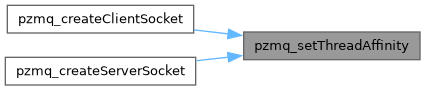
Referenced by pzmq_createClientSocket(), and pzmq_createServerSocket().
 1.17.0